Fanxiang MP83 M.2 NVMe SSD Enclosure
M.2 2230 drives are an odd corner of the SSD market — too short to fit most "universal" enclosures, but increasingly common thanks to devices like the Steam Deck, which ship with a small NVMe stick that owners often outgrow and replace. That leaves the original drive with no obvious second life unless you can find an enclosure actually built for its size, rather than one that merely claims 2230 compatibility via an add-on bracket.
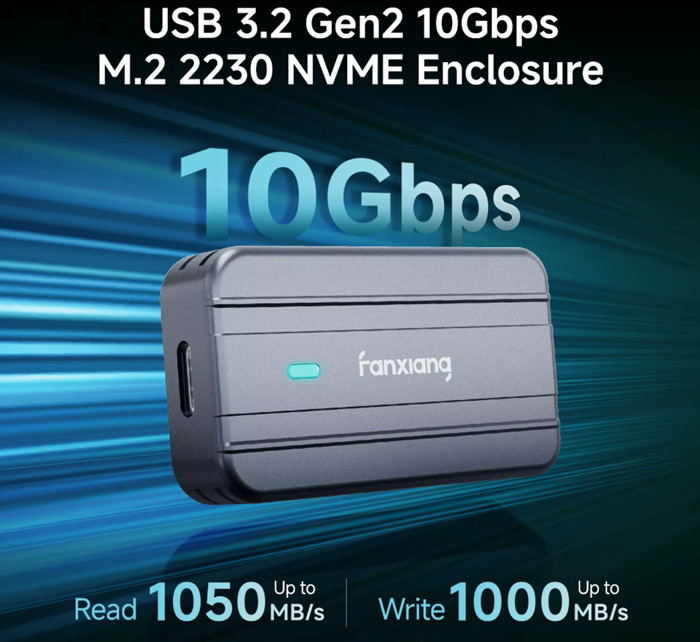
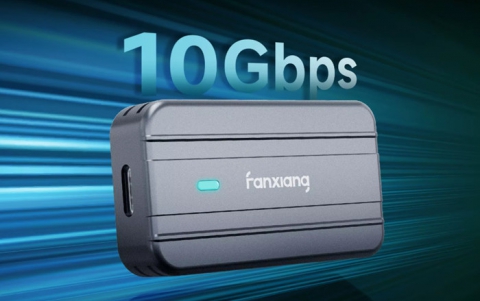
The Fanxiang MP83 is a €16 pocket enclosure built specifically around that 2230-only footprint, promising USB 3.2 Gen 2 (10Gbps) speeds in an aluminum shell small enough to disappear into a coin pocket. At this price point, budget NVMe enclosures live or die on a few unglamorous details: whether the bridge chip inside is a known-good part or a corner-cut unknown, whether the thermal design is more than decorative, and whether the marketed speeds hold up once a real drive is actually plugged in and tested. This review walks through all three — drawing on the official spec sheet, a full teardown of a real unit, and hands-on benchmark data with a Silicon Power UD90 2TB drive installed — to see whether the MP83 backs up its claims.
Users can find the Fanxiang MP83 model over Aliexpress
Specifications
| Spec | Value |
|---|---|
| Material | Aluminum alloy |
| Drive interface | M.2 B&M-Key |
| Host interface | USB-C, USB 3.2 Gen 2 |
| Protocol | NVMe only, 10Gbps |
| Supported M.2 size | 2230 only |
| Max capacity | 2TB |
| OS support | Windows / macOS / Linux / Android (OTG) |
| Dimensions | 52.4 × 28.6 × 10.3 mm |
| Weight | ≈30g |
| Warranty | 5-year |
Unboxing
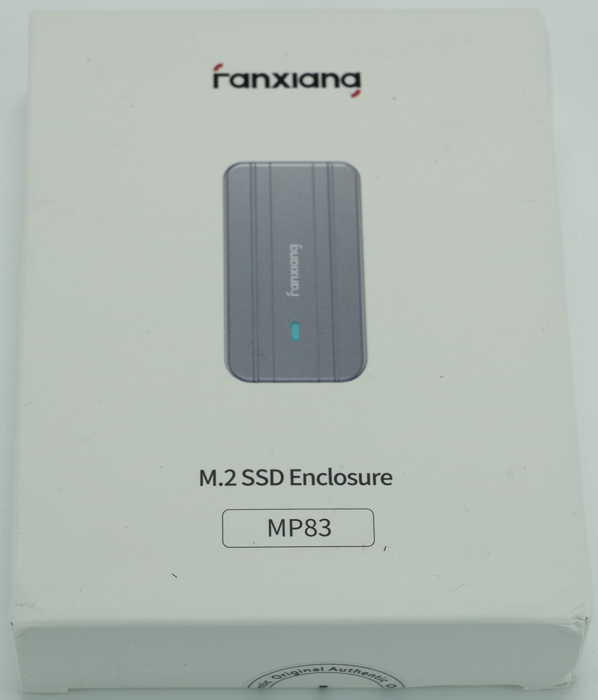
The retail box is plain white with just the Fanxiang logo and a product render.
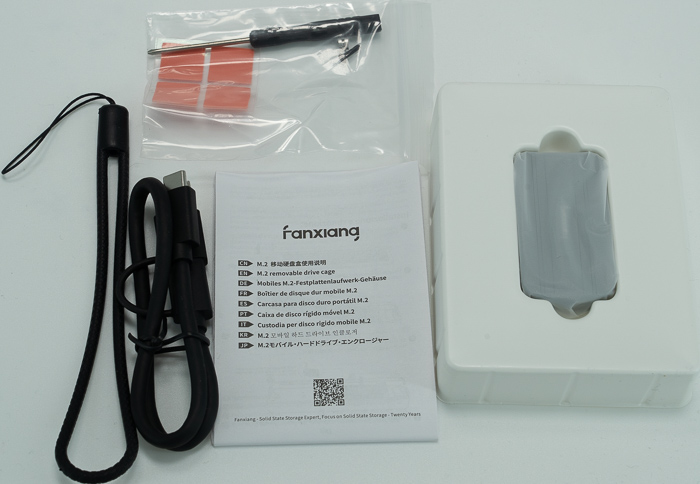
Inside you will find the enclosure itself, a braided-look USB-C-to-C cable with a woven wrist lanyard attached, a small Phillips screwdriver, thermal pads wrapped in plastic, and a multi-language instruction book.
Design and build
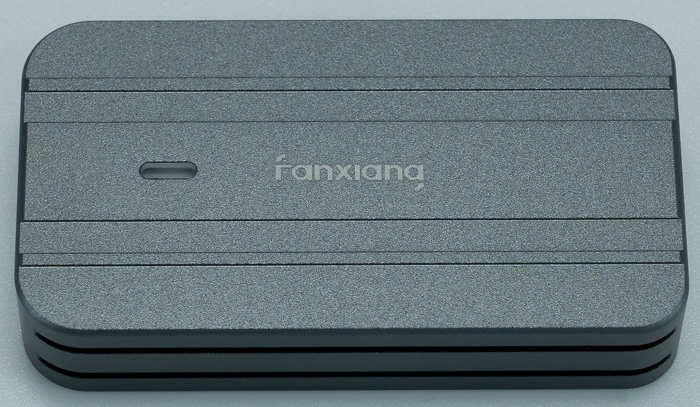
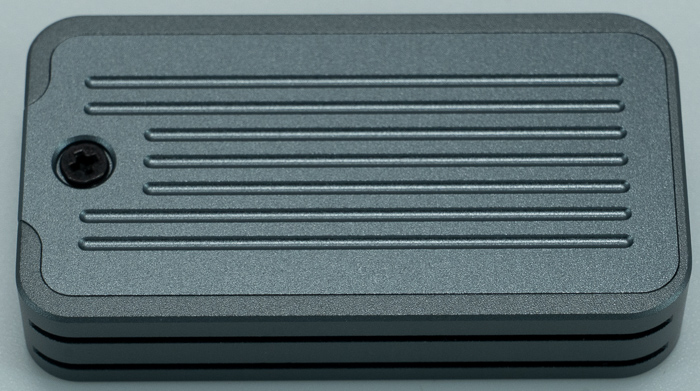
The shell in the photos is metal with a ribbed top surface and rounded corners, reading as brushed aluminum.
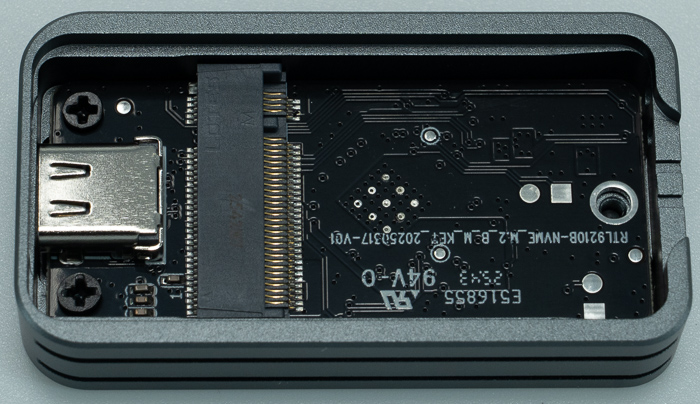
The case opens with a single Phillips screw on the back panel, with no clips to pry
A small teal LED sits on the top face next to the logo and the USB-C port on the top edge.
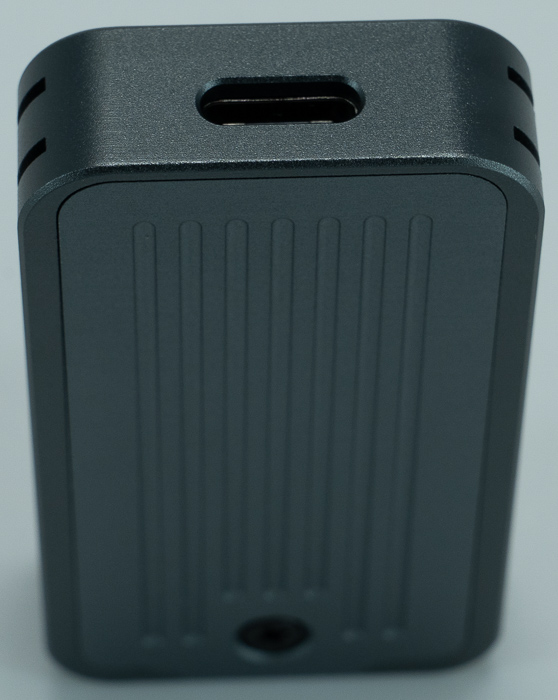
At 52.4 × 28.6 × 10.3mm and roughly 25-30g, this is genuinely pocket or keychain-sized, smaller than a car key. The manufacturer also claims an auto-sleep feature, powering the drive down after 10 minutes of inactivity to reduce wear — this is a controller-level behavior rather than something visible in a teardown photo, so it's stated here as a spec claim rather than something directly confirmed.
What's inside
Opening the case reveals a bridge controller marked RTL9210B-NVME, a Realtek chip with a solid track record as a USB-to-NVMe bridge across reputable enclosures, not just budget ones. This matters more than the box copy does: it's the part actually responsible for translating NVMe commands over USB, and the 9210B's known support for UASP acceleration lines up with the manufacturer's own claims about transfer speed.
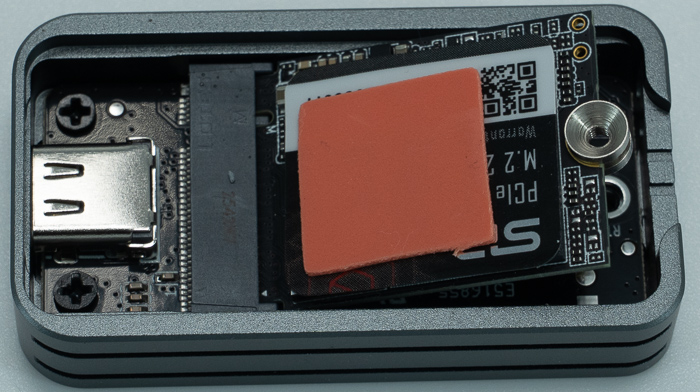
A thermal pad sits between the installed SSD and the inner shell, consistent with the "thermal silicone pad" the manufacturer describes, and the M.2 slot itself is sized for 2230 drives only — there's no physical room for 2242, 2260, or 2280 lengths, matching the spec sheet. This is a hard mechanical limit rather than a firmware restriction.
USB descriptor and device ID
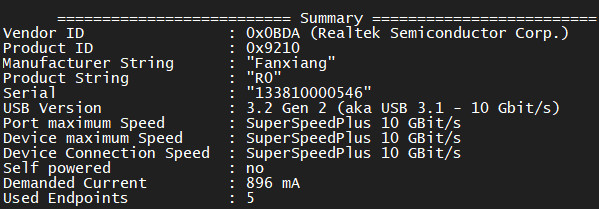
Windows Device Manager identifies the enclosure in a way that lines up with the teardown: it reports as a Realtek Semiconductor Corp. device (Vendor ID 0x0BDA, Product ID 0x9210), confirming the RTL9210B chip seen on the board, with a manufacturer string of "Fanxiang" and a negotiated link speed of USB 3.2 Gen 2 (SuperSpeedPlus 10Gbit/s) on both the port and the device.
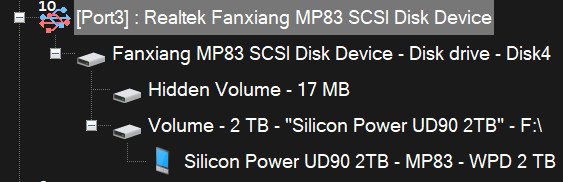
It's bus-powered rather than self-powered, drawing up to 896mA — worth keeping in mind if it's ever run off a weaker USB-C port, hub, or phone, since undersized power delivery is a common cause of random external-drive disconnects on bridge-chip enclosures generally. It shows up in Windows as "Fanxiang MP83 SCSI Disk Device," alongside a small ~17MB hidden volume next to the main partition, most likely enclosure firmware or utility space rather than anything to worry about.
Benchmarks (with a Silicon Power UD90 2TB installed)
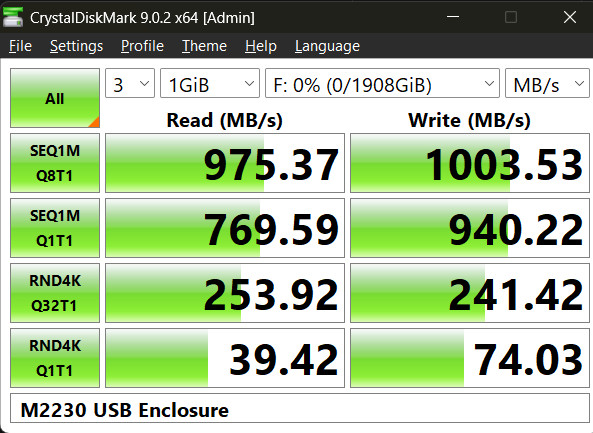
CrystalDiskMark 9 (1GiB test, admin, drive ~89% full at time of test):
| Test | Read | Write |
|---|---|---|
| SEQ1M Q8T1 | 975 MB/s | 1004 MB/s |
| SEQ1M Q1T1 | 770 MB/s | 940 MB/s |
| RND4K Q32T1 | 254 MB/s | 241 MB/s |
| RND4K Q1T1 | 39 MB/s | 74 MB/s |
That sequential write figure of 1004 MB/s is essentially at the theoretical ceiling of a 10Gbps USB link, meaning this enclosure is squeezing everything the RTL9210B and USB 3.2 Gen 2 combination has to give — a genuinely strong result for a €16 product. Random 4K performance is respectable for an external USB enclosure, though naturally lower than a native NVMe connection would show; that gap is typical of USB bridging overhead in general, not a flaw specific to this unit.
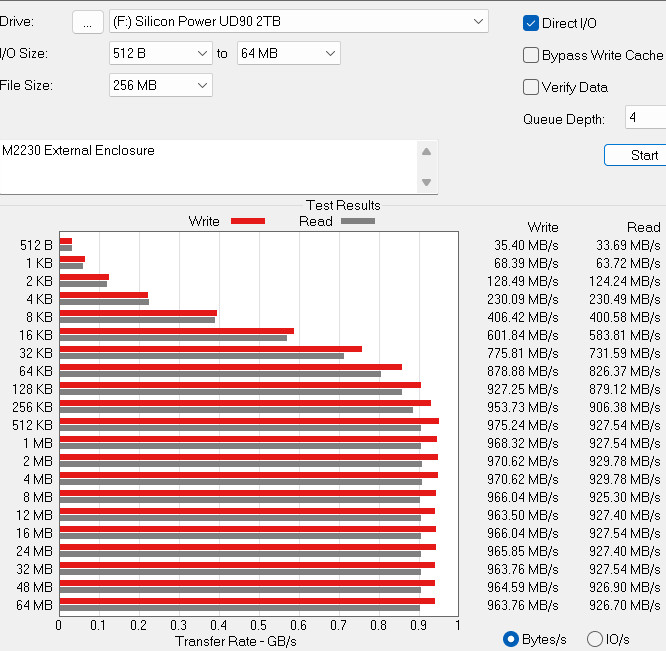
A transfer-size sweep from 512B to 64MB blocks (queue depth 4, 256MB file, Direct I/O) confirms the CrystalDiskMark result rather than contradicting it: throughput ramps up smoothly as block size increases and plateaus around 955-975 MB/s sustained for both read and write from roughly the 512KB block size onward, holding flat all the way to 64MB blocks with no sign of a cliff or throttling within this test's scope. Small-block performance in the 512B-8KB range is naturally much lower, which is expected of any USB storage bridge rather than specific to this enclosure.
Two caveats apply to this data. It's a short-duration synthetic benchmark rather than a sustained real-world copy of 100GB or more, so it doesn't reveal whether thermal throttling kicks in on long transfers — the compact aluminum shell and modest thermal pad remain a reasonable place to expect degradation that a short synthetic test wouldn't catch. It also reflects one specific drive, the Silicon Power UD90; a slower or cheaper 2230 SSD paired with the same enclosure would likely show lower numbers, particularly on random 4K performance and sustained writes once any SLC cache on that drive is exhausted.
Performance expectations
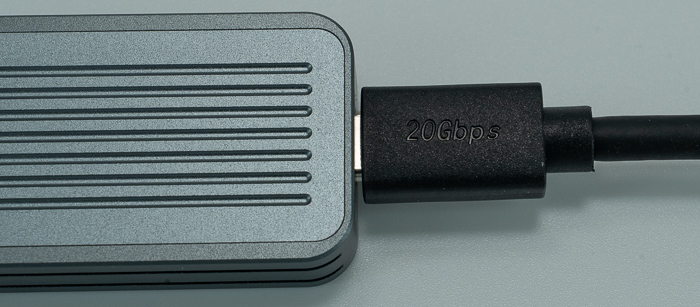
The bench data above already confirms the enclosure can genuinely hit its rated roughly 10Gbps ceiling with a fast drive, so the "up to 10Gbps" marketing claim checks out here rather than remaining a paper spec. If results differ from this on another setup, the manufacturer's own fine print is worth taking seriously: the rated speed needs to be matched with a corresponding motherboard/port to basically achieve it, so an older USB 3.0-only port is worth ruling out first before assuming a faulty unit. One of the photos shows the bundled cable printed with "20Gbps" — that's the cable's own rating rather than a bottleneck, since the enclosure's ceiling is actually set by the RTL9210B chip and the host port. Because the enclosure rather than the drive sets that ceiling for any modern NVMe SSD, there's little benefit to pairing it with an especially expensive high-end 2230 drive; a mid-range one, as tested here, is already enough to saturate the link.
The manufacturer's own marketing states read speeds up to 1050MB/s and write speeds up to 1000MB/s. The measured write result of 1004 MB/s essentially matches that claim, while measured sequential read — 975 MB/s in CrystalDiskMark, similar in the sweep — came in a bit under the claimed 1050 MB/s. That's close enough to fall within normal drive-to-drive or run-to-run variance, but it's worth noting the read figure wasn't fully matched in this particular test.
Who it's for
This enclosure suits Steam Deck or handheld owners repurposing their old 2230 drive after an internal upgrade, and anyone who already owns a spare 2230 NVMe stick and wants a compact, well-built way to use it externally. It's a less obvious pick for anyone buying a drive and enclosure together from scratch, since 2280 enclosures unlock a much larger and often cheaper pool of SSD choices.
Bottom line
This is a well-specced budget enclosure that backs up its own marketing: a genuine Realtek NVMe bridge chip, a thermally-padded metal shell, a generous accessory bundle, and — confirmed by actual benchmarks rather than just the spec sheet — sequential speeds that genuinely saturate its rated 10Gbps USB link, hitting around 1000MB/s on writes. The real hard constraint remains the 2230-only slot: great if a matching drive is already on hand, less ideal if drive and enclosure are being bought together.