Club3D X1800XT
1. Introduction
 Club3D
has been one of the leading VGA card manufacturers in Europe. Apart from the
production of the widely known ATi and NVidia based graphics cards, they have
recently set up a collaboration with S3 and XGI, introducing some alternative
solutions into the market.
Club3D
has been one of the leading VGA card manufacturers in Europe. Apart from the
production of the widely known ATi and NVidia based graphics cards, they have
recently set up a collaboration with S3 and XGI, introducing some alternative
solutions into the market.
This time round, we received one of the latest additions to Club3D's product list, a 512MB ATI X1800XT. In short, the X1800XT is the highest performing ATI card to date, and is targeted at dedicated gamers and computer enthusiasts.
- Packaging/Bundle
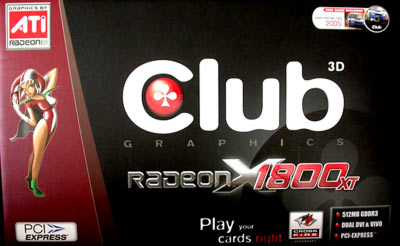
The card as usual, shipped in the stylish black package that has become the hallmark of Club3D. Apart from the card itself, inside the package we found the following:

- S-video/Composite/YPrPb/VIVO cable
- Colin McRae 2005 DVD version
- 2x DVI/CRT converter
- Power DVD 6
- PowerDirector Express 3
- PowerProducer 3
- Medi@show
- E-Manual and driver CD
Let's move on with the full card details.