Swit NP-FZ100 Battery
2. Retail Package
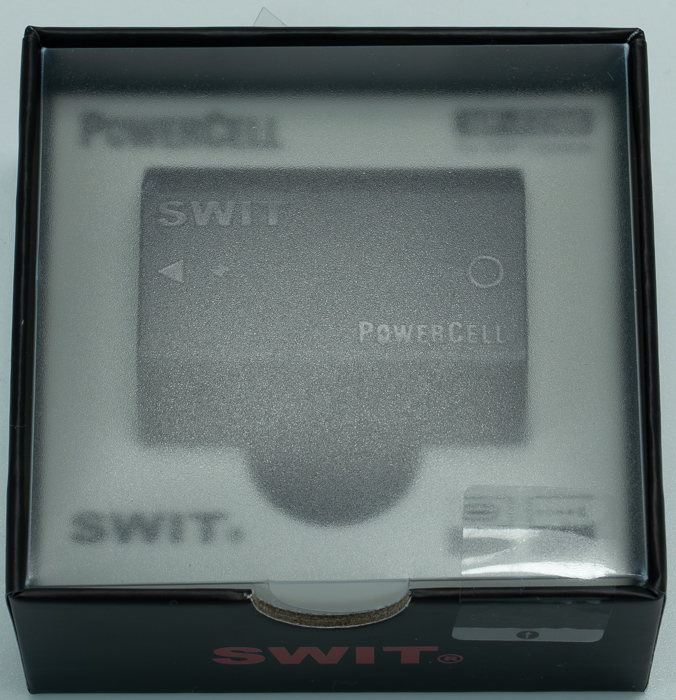
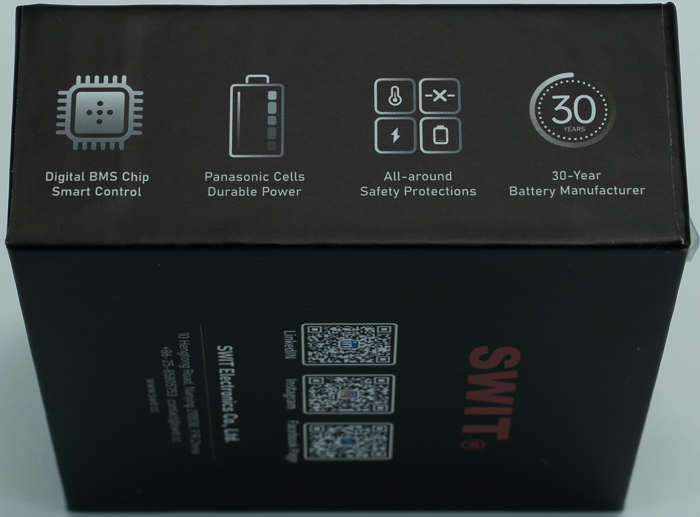
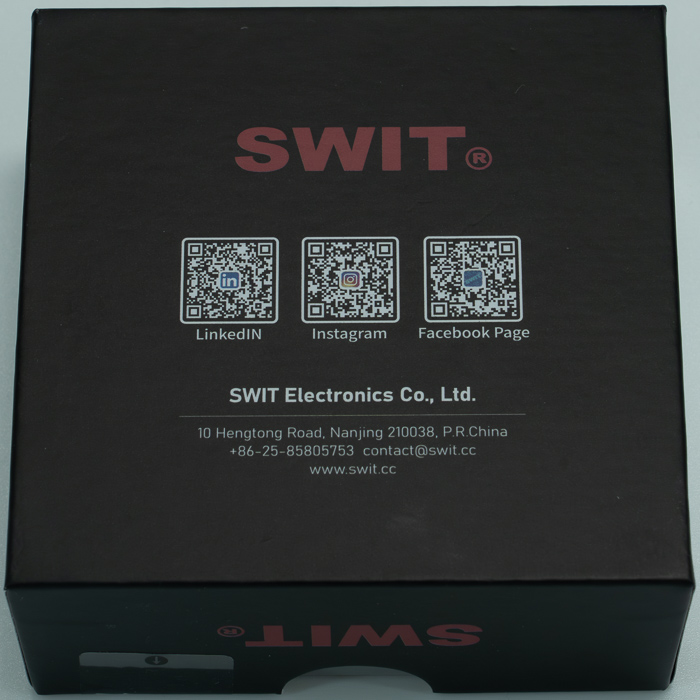
The retail package is a small box that mostly includes the battery and the product information around its sides. Opening the package is simple.
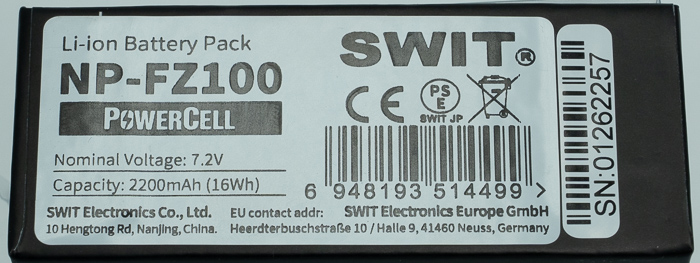
At 78.5g and 51.7×38.7×22.7mm, the PowerCell is physically identical to the original Sony NP-FZ100, fitting securely without obstruction in any compatible body.
Capacity is 7.2V / 2200mAh / 16Wh — matching Sony's spec exactly. The charging limit voltage is 8.4V. The housing uses V0-grade flame-retardant plastic, the same standard found on professional cine batteries rather than the cheaper V2 material common in budget third-party packs.
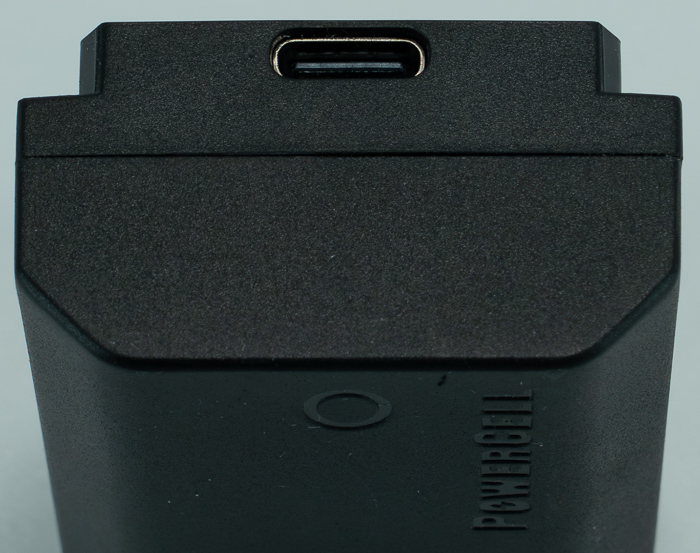
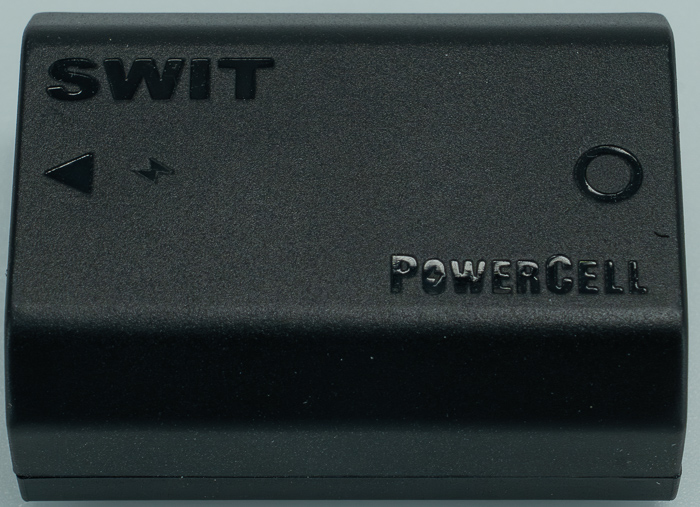
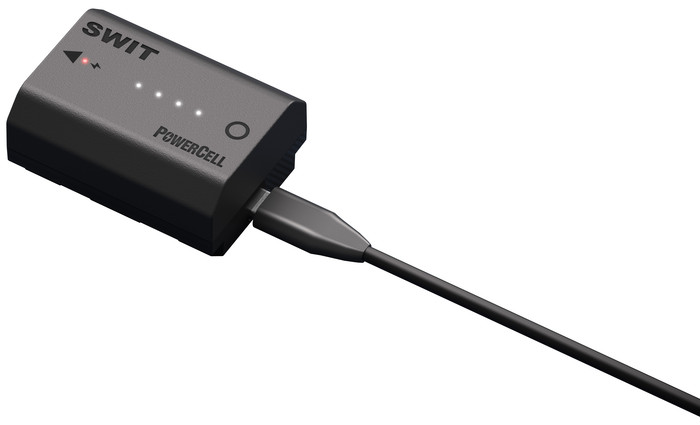
The top face carries the SWIT and PowerCell branding alongside the LED strip and touch button. The left side profile shows the USB-C port.
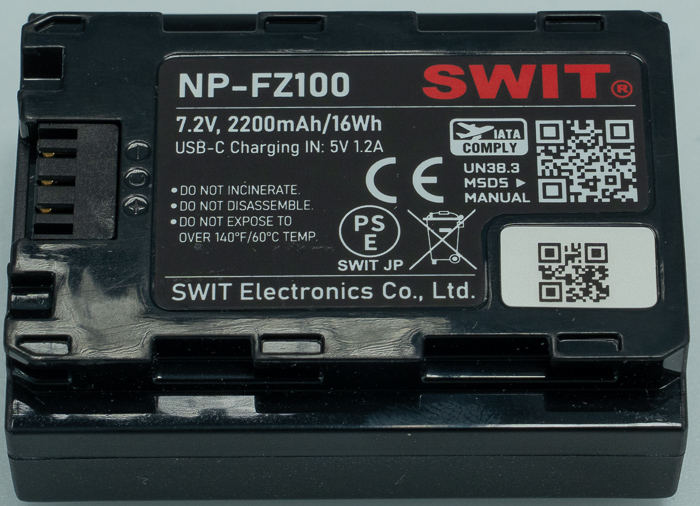
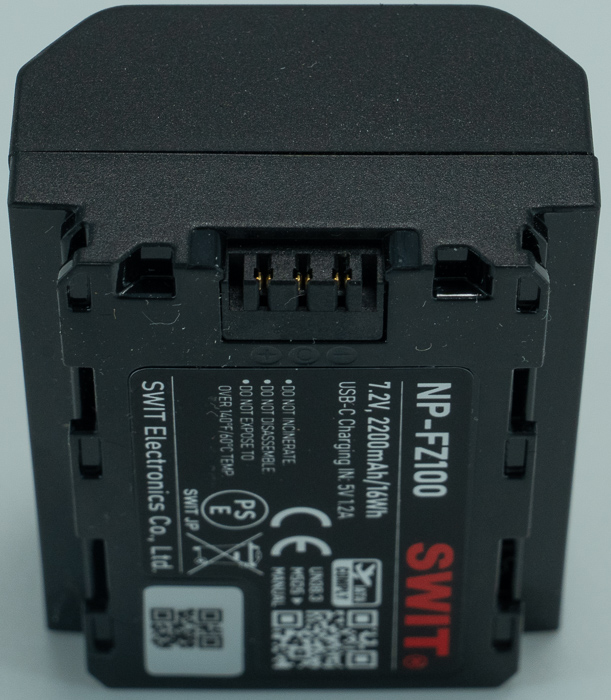
The bottom carries the electrode contacts and label with full electrical specs.
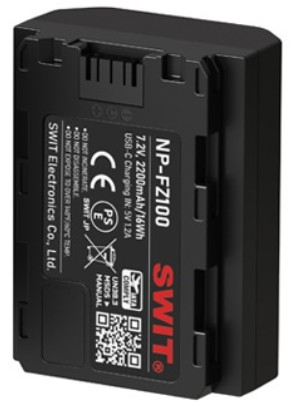
Internally, the battery is configured as 2S1P — two Panasonic NCR1850B cells in series. Each cell runs at 3.6V nominal with 2200mAh capacity, a maximum charging current of 1125mA, and a maximum discharging current of 4500mA per cell. Discharge cut-off is 5.0V at the pack level (2.5V per cell). Panasonic's NCR18650B cells are among the most respected lithium-ion cells in the industry, used in premium consumer electronics and professional equipment precisely because of their consistent discharge curves, low self-discharge, and long cycle life.
SWIT makes a pointed claim in the launch announcement: the 7.2V / 2200mAh / 16Wh capacity is "real and not overstated." This is a direct reference to a widespread problem in the third-party battery market, where nominal mAh figures are routinely inflated — a battery labelled 2600mAh or 3000mAh often delivering far less under real-world load. The UN38.3 test data supports SWIT's claim: voltage retention across all abuse tests came in at 98.75–100%, with mass loss of 0.00–0.03% — figures consistent with cells performing exactly as rated.
Keep in mind that the battery ships partially charged and should be charged before first use. If the battery enters a protection state due to excessively low voltage after full discharge, charge it promptly — it will return to normal operation.
Operating range per the manual: -10°C to +40°C for discharge, 0°C to +40°C for charging. For optimal performance, SWIT recommends charging within a narrower 10°C to 30°C window. In cold conditions below +10°C, usable runtime will decrease — worth noting for outdoor winter shoots.
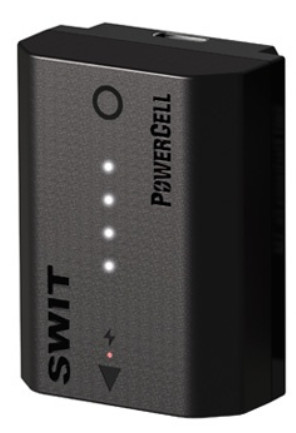
The four-LED indicator system, activated by the touch button on the battery body, displays charge in five distinct states:
- Four LEDs solid — remaining power ≥90%
- First LED flashing, three solid — remaining power 75–90%
- Two LEDs flashing, two solid — remaining power 50–75%
- Three LEDs flashing, one solid — remaining power 25–50%
- All four LEDs flashing — remaining power below 25%
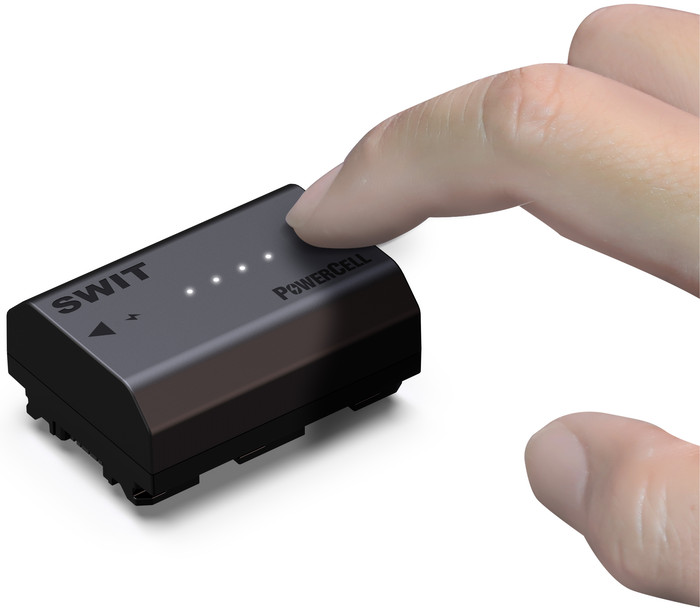
The distinction between solid and flashing LEDs for intermediate states is a more nuanced readout than the simple four-step indicator found on many third-party batteries. Combined with the camera's own accurate percentage display, you get redundant charge information both in-camera and on the battery itself — useful when sorting through a bag before a shoot.
The manual provides specific storage guidance:
- For long-term storage, keep charge between 50–90%. Do not store the battery fully discharged, and charge it regularly.
- When not in use, remove the battery from the camera or charger.
- Store in a cool, dry place.
The warranty exclusions reinforce this: capacity loss from storage exceeding six months without a reactivation charge is not covered. If you're putting these away between productions, charge to the 50–90% range and top up periodically.
Key points beyond the standard lithium battery warnings:
- Do not store or charge near a fire source or in direct sunlight — this can damage the protection circuit, not just the cells.
- Do not store or carry together with metal objects such as coins or necklaces — short-circuit risk.
- Do not use or store above 60°C.
- The battery will get hot during charging and use — described in the manual as a normal phenomenon.
- If the battery emits noise, smoke, an unusual odour, or temperature rises abnormally, contact SWIT after-sales service immediately.
- Keep out of reach of children.
In the event of electrolyte leakage: keep away from fire sources; wipe off and replace the battery; if contact with eyes, rinse immediately with clean water and seek medical attention; if contact with skin or clothing, wash thoroughly with clean water.
Warranty
One year conditional. Exclusions include misuse, third-party charger damage, natural capacity reduction over charge cycles, capacity loss from storage over six months without reactivation, and external factors such as fire or lightning.