1. Introduction
Test Media - Page 1
- Introduction
Recently we have upgraded our test methodology with the adoption of industry
standard test discs. The importance of standardized test discs is high since
it enables manufacturers to isolate and improve possible problems/bugs that
may arise during our tests. In the following pages we describe the physical
characteristics of the discs.
- What is test media?
Various kinds of Test media are used in developing audiovisual goods, car audio
goods, and computers you often see in your daily life. They play a very important
role in securing playback compatibility between those products. For instance,
you don't worry whether music CDs sold in the ships will play on your CD player.
You know it will. That's because hardware manufacturers of CD player have maintained
the compatibility for various conditions of discs. Test media is always necessary
to achieve that. Without test media, you perhaps, might have to worry about
the playability of music CD you want to buy at shops.
"Test media" might be described, in other words, like a "measuring
rod of playability". In reading a CD, for instance, there is provision
in the reader for disc damage. Even if there are small scratches on your CD,
the CD player can often play the CD without any noise or interruption since
it has some error correction circuitry. Using standard Test CD with various
sized scratches, hardware manufacturers can know the capability margin of their
CD player and its ability to correct for scratches and defects in the media.
"Test media" is the generic name for discs and tapes user as standards
for strict quality specifications, which are required in the processes of designing,
manufacturing, and quality control of DVD (CD)-ROM drives, DVD (CD) players,
MD players, and Cassette tape recorders.
- Where "Test Media" products are used?
They are used in diversified places and purposes not only in designing, but
also in the production process such as the process of manufacturing, assembling,
and inspection. All products pass through tests before shipment will be shipped
to the marketplace. Every DVD player you used and every CD-ROM drive you have
used to play movies or games was tested to standard using Test Media products.
Test media products are used in the development and manufacturing of:
- Semiconductors used in drives
- Optical pick-up units
- Mechanical units
- Printed circuit boards (PCB)
- Enclosures
- Finished product testing and finally even in repair service facilities
- Are there various kinds of "Test Media"?
Besides standard times are mainly used for reference purposes, various Test
Media have been developed on which defects are intentionally created in order
to simulate flaws and damage. Testing of CD, DVD and other involves this type
of media. As Almedio says "...we have developed more than 3000 kinds of
test tapes and more than 1500 kinds of custom test discs..."
- Which manufacturers sell "Test Media"?
 was
established in 1981. The company is engaged in 1) the planning, development,
manufacture and sale of commercial-use test media such as test discs, test tapes
and test CD-ROMs used to measure and adjust the performances of electrical,
mechanical characteristics of cassette players, video players, CD players and
CD-ROM drives; 2) manufacture of music CDs consigned by music software production
companies and CD-ROMs and 3) consigned systems development and development and
sale of CAD (computer-aided drafting) systems.
was
established in 1981. The company is engaged in 1) the planning, development,
manufacture and sale of commercial-use test media such as test discs, test tapes
and test CD-ROMs used to measure and adjust the performances of electrical,
mechanical characteristics of cassette players, video players, CD players and
CD-ROM drives; 2) manufacture of music CDs consigned by music software production
companies and CD-ROMs and 3) consigned systems development and development and
sale of CAD (computer-aided drafting) systems.
Almedio is probably the biggest manufacturer that offers Test Media. They offer
CD, CD-R, DVD, MD and casette test media for various uses. For more information
check www.almedio.co.jp
Contact
Sales Division Test Media Dep.
Phone: 042-397-1331Fax: 042-397-1919
E-MAIL: tm-sales@almedio.co.jp
-
Pioneer: Pioneer DVD Verification Laboratory offers DVD-R/RW verification
Tests discs for DVD-R/RW enabled drives. Fore more information check their website
or contact them directly...
DVD Verification Laboratory
4-2610 Hanazono,
Tokorozawa-shi,
Saitama 359-8522,
Japan
Fax: +81-42-990-2831
E-Mail: minemasa_ohta@post.pioneer.co.jp
- TEAC Japan
offers also a series of test media for CD,
DVD,
MD, casette formats.
For more information:
Calibration Media Group
Phone: (81) 0422 52 5074
Fax: (81) 0422 55 2582
E-Mail: media@ho.teac.co.jp
-
JVC Japan offers a series of test media for CD,
DVD,
MD, casette formats
For more information:
VICTOR COMPANY OF JAPAN, LIMITED
MITO BUSINESS CENTER
TEST MEDIA GROUP
1030 Motoyoshida-cho, Mito-city, Ibaraki, 310-8528 JAPAN
Telephone: +81-(0)29-247-3111
Fax: +81-(0)29-247-1570
E-mail: t-media@md.jvc-victor.co.jp
-
Panasonic Japan offers test media for DVD formats
- Philips offers
a variety of test media for CD format.
2. ABEX TCD Series
Test
Media - Page 2
ABEX TCD Series
ABEX TCD series discs are designed for measurement and adjustment of the focusing/tracking
servo characteristics and error correction performance of compact disc players
when playing a test CD with various kinds of defects. The signals recorded on
the TCD disc series are shown in the following table:
|
Table-1
|
|
TNO
|
Contents
|
Time
|
|
1
|
Menuetto
|
3'15"
|
|
2
|
2eme Gymnopedie
|
2'32"
|
|
3
|
Overtunre Miniature (Casse-noisetter,
Op. 71a)
|
3'02"
|
|
4
|
Marche (Casse-noisette, Op. 71a)
|
2'36"
|
|
5
|
Claire de Lune
|
3'09"
|
|
6
|
Nocturne (Op.9-2)
|
3'12"
|
|
7
|
Danse de la Fee Dragee (Casse-noisetter,
Op. 71a)
|
2'26"
|
|
8
|
Danse Arabe (Casse-noisette, Op. 71a)
|
2'29"
|
|
9
|
Fantaisie-Improptu (Op. 66)
|
2'51"
|
|
10
|
Hungarian Dance No. 5
|
2'02"
|
|
11
|
Prelude <Raindrop>
|
3'38"
|
|
12
|
Maiden's Prayer
|
3'15"
|
|
13
|
Valse des Fleurs (Casse-noisette, Op.
71a)
|
3'08"
|
|
14
|
1ere Gymnopedie
|
2'54"
|
|
15
|
Danse des Mirlitons (Casse-noisette,
Op. 71a)
|
2'06"
|
|
|
Total time (including pause time)
|
43'05"
|
- Eccentric Test CD
1. Purpose: These discs are designed for measurement and adjustment of the
tracking servo characteristics of a CD player when it is used to play an eccentric
compact disc.
2. Disc specifications
2.1. Eccentricity of TCD-714 (280±15micrometers)
2.2. Recorded: The signals recorded on the disc are shown in Table-1
2.3. Center hole diameter: 15+0.04mm
2.4. Scanning velocity: 1.25m/s
- Scratch Test CD
1. Purpose: These discs are designed for measurement and adjument of the tracking
servo characteristics and error correction performance of CD players when playing
a scratched compact disc.
2. Disc specifications of TCD-721R
2.1. Recorded: The signals recorded on the disc are shown in Table-1.
2.2. Scratch Specifications
|
TNO
|
Width of scratch
|
|
1
|
0.0mm
|
|
2
|
0.4mm
|
|
3
|
0.6mm
|
|
4
|
0.8mm
|
|
5
|
1.0mm
|
|
6
|
1.2mm
|
|
7
|
1.4mm
|
|
8
|
1.6mm
|
|
9
|
1.8mm
|
|
10
|
2.0mm
|
|
11
|
2.2mm
|
|
12
|
2.4mm
|
|
13
|
2.6mm
|
|
14
|
2.8mm
|
|
15
|
3.0mm
|

2.3. Center hole diameter: 15+0.04mm
2.4. Eccentricity of track radious: 0+20micrometer
2.5. Scanning velocity: 1.25m/sec
- Defects Test CD
1. Purpose: This discs is designed for measurement and adjustment of the error
correction performance of a CD player when it is used to play a defective compact
disc. This disc contains three types of defects: interruption, black dots, and
fingerprints.
2. Disc specifications of TCD-726
2.1. Recorded: The signals recorded on the disc are shown in Table-1
2.2. (a) Interruption: Dropout of pits is simulated by varying the length of
the pit (see Fig-1)

2.2 (b) Black dots: Stains and foreign materials on the disc surface are simulated
in this section (see Fig-2)
2.2. (c) Fingerprints: Fingerprints are simulated in this section (see Fig-2)

|
TNO
|
Description
|
|
1
|
None
|
|
2
|
0.5mm interruption
|
|
3
|
0.7mm interruption
|
|
4
|
0.8mm interruption
|
|
5
|
0.9mm interruption
|
|
6
|
1.0mm interruption
|
|
7
|
ø 0.4mm black dot
|
|
8
|
ø 0.6mm black dot
|
|
9
|
ø 0.8mm black dot
|
|
10
|
ø 1.0mm black dot
|
|
11
|
ø 1.0mm black dot
|
|
12
|
None
|
|
13
|
ø 65micrometers fingerprints
|
|
14
|
ø 65 / ø 75micrometers
fingerprints
|
|
15
|
ø 75micrometers fingerprints
|
2.3 Scanning velocity: 1.25m/sec
- Limits
The local defects and the various scratches that the TCD series test discs
includes is not supposed to passed from all drives. For example, we can see
at the following test report of the AOpen CRW4048 with firmware v1.07 that manufacturer
is satisfied from the drive's ability only to pass up to 1.2mm scratch, and
not the full 3.0mm.
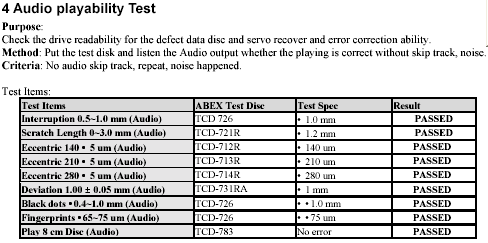
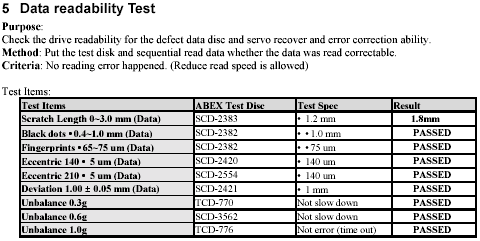
We have to understand that the limits of the TCD series are sometimes over
the limits that CD standards state. If a drive can work over its limits it is
possible that will read the defect area of the disc without any problems...Making
a drive working out of its limits however, indicates that a lot of work is done
in the firmware that is time consuming. Not all companies can spend much time
to improve a drive's ability to read damaged/defect media.
3. ABEX TDR Series
Test
Media - Page 3
ABEX TDR Series
1. Purpose
ABEX TDR Series discs are designed for DVD-ROM drives. These discs can be used
for evaluation of DVD-ROM performances such as data reading capability, access
time, and so on. The construction and formula of data in this disc is clearly
specified, so that you can confirm whether data has been read correctly. This
is done by comparing the sector address and data on a specified sector with
known data. No file structure (UDF file format) exists in this disc, so that
we can use this disc for many different purposes.
2. Disc specifications
2.1. Disc Parameter
|
Disc Type
|
TDR-820A
|
TDR-840
|
|
Disc structure
|
Single Sided Single Layer
|
Single Sided Dual Layer Parallel track
path
|
|
Capacity
|
4.7Gbyte
|
8.54Gbyte
|
|
Scanning velocity
|
3.49m/sec
|
3.84m/sec
|
2.2. Data format
|
ID
|
IED
|
CPR-MAI
|
User Data
|
EDC
|
|
4
|
2
|
6
|
2048
|
4Byte
|
3. The construction of user data
This data consists of the following six types:
- Sector number data (start sector address , from 03 00 00h)
- Sector number data (start sector address, from 00 00 00h)
- ECC block number data
- "ABEXDVD" character data
- M-Sequence data
- Check sum data
3.1. Contents of the data sector
|
ID
|
Sector information + sector number
|
4 Bytes
|
|
IED
|
ID error detection code
|
2 Bytes
|
|
CPR-MAI
|
Copyright management information
|
6 Bytes
|
|
User data
|
Test data
|
2.048 Byte
|
|
EDC
|
Error detection code
|
4 Bytes
|
|
TDR-820A: Sector address
|
03 00 00h through 25 FF FFh
|
|
TDR-840: Sector address
|
Layer 0: 03 00 00h through 22 D0 5Fh
|
|
Layer 1: 22 D0 60h through 42 A0 BFh
|
SINGLE LAYER DISCS (the TDR-820A is the base disc for all test discs
in this series)
The TDR-821 contains scratches with the following characteristics
|
Width of Scratch
|
Address No. (hex)
|
|
0.4mm
|
05363A
|
|
0.6mm
|
06866C
|
|
0.8mm
|
07CEC0
|
|
1.0mm
|
0929A5
|
|
1.2mm
|
0A971B
|
|
1.4mm
|
0BF481
|
|
1.6mm
|
0D3166
|
|
1.8mm
|
0E6D9E
|
|
2.0mm
|
0F8E67
|
|
2.2mm
|
10D1F0
|
|
2.4mm
|
12636F
|
|
2.6mm
|
13E734
|
|
2.8mm
|
154C11
|
|
3.0mm
|
175F96
|
The TDR-825 contains defects with the following characteristics
|
Description
|
Address No. (hex)
|
|
0.5mm black band
|
07E0A6
|
|
0.7mm black band
|
097BD8
|
|
0.8mm black band
|
0B30BD
|
|
0.9mm black band
|
0CFF55
|
|
1.0mm black band
|
0EE7A1
|
|
1.1mm black band
|
10E99F
|
|
ø 65micro meter fingerprints
|
158330
|
|
ø 75micro meter fingerprints
|
186E16
|
DUAL LAYER DISCS (the TDR-840A is the base disc for all test discs in
this series)
The TDR-841 contains scratches with the following characteristics:
|
Width of Scratch
|
Address No. (hex)
|
|
Layer 0
|
Layer 1
|
|
0.4mm
|
0503C8
|
24D428
|
|
0.6mm
|
063508
|
260568
|
|
0.8mm
|
075F23
|
272F83
|
|
1.0mm
|
089A1A
|
286A7A
|
|
1.2mm
|
09E5ED
|
29B64D
|
|
1.4mm
|
0B232A
|
2AF38A
|
|
1.6mm
|
0C42E3
|
2C1343
|
|
1.8mm
|
0D6200
|
2D3260
|
|
2.0mm
|
0E6834
|
2E3894
|
|
2.2mm
|
0F8DF5
|
2F5E55
|
|
2.4mm
|
10FA7F
|
30CADF
|
|
2.6mm
|
125A93
|
322AF3
|
|
2.8mm
|
139E97
|
336EF7
|
|
3.0mm
|
15812F
|
35518F
|
Below is a picture of the ABEX TDR-841 series:
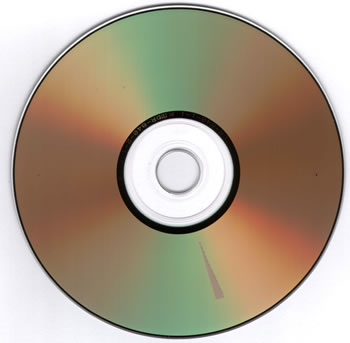
After zooming over the scratch we can see the details:

The TDR-845 contains defects with the following characteristics:
|
Description
|
Address No. (hex)
|
|
Layer 0
|
Layer 1
|
|
0.5mm black band
|
076F64
|
273FC4
|
|
0.7mm black band
|
08E4BC
|
28B51C
|
|
0.8mm black band
|
0A716A
|
2A41CA
|
|
0.9mm black band
|
0C156E
|
2BE5CE
|
|
1.0mm black band
|
0DD0C7
|
2DA127
|
|
1.1mm black band
|
0FA376
|
2F73D6
|
|
ø 65micro meter fingerprints
|
13D0A3
|
33A103
|
|
ø 75micro meter fingerprints
|
1676C9
|
364729
|

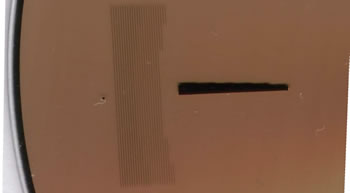
A closer look over the black band and fingerprints:
4. ABEX TDV Series
Test Media - Page 4
ABEX TDV Series
- Purpose
The ABEX TDV Series discs are designed for measurement and adjustment of DVD
video players. These single-sided dual layer (S-2 type) discs check layer switching
operation from layer 0 to layer 1, and also include test pictures and test signals
for Dolby Digital, linear PCM (48k/24bit, 96k/24 bit), and others which facilitate
checking for high quality picture and sound.
1. Disc specifications
|
Disc Type
|
DVD-VIDEO MPEG-2 NTSC
|
|
Disc structure
|
Single Sided Dual Layer (S2)/ Opposite
track path
|
|
Capacity
|
8.49Gbyte
|
|
Scanning velocity
|
3.84m/sec
|
|
Transfer rate (video)
|
2.6-8Mbps
|
- No menu (continuous play)
- Area code: Almighty (available to playback at all regions)
- Switching to Layer 1 on title 1 of Chapter 17 (after 16secs from starting)
- DVD read-only disc; ver. 1.0 compatible
- TDV-541
The TDV-541 contains scratch with the following characteristics:
|
Chapter No.
|
Width of scratch
|
|
1
|
0.0mm
|
|
2
|
0.4mm
|
|
3
|
0.6mm
|
|
4
|
0.8mm
|
|
5
|
1.0mm
|
|
6
|
1.2mm
|
|
7
|
1.4mm
|
|
8
|
1.6mm
|
|
9
|
1.8mm
|
|
10
|
2.0mm
|
|
11
|
2.2mm
|
|
12
|
2.4mm
|
|
13
|
2.6mm
|
|
14
|
2.8mm
|
|
15
|
3.0mm
|
|
16
|
None
|
- TDV-545
The TDV-545 contains defects with the following characteristics
|
Chapter No.
|
Description
|
|
1
|
None
|
|
2
|
None
|
|
3
|
None
|
|
4
|
None
|
|
5
|
None
|
|
6
|
None
|
|
7
|
ø 0.4mm black dot
|
|
8
|
ø 0.6mm black dot
|
|
9
|
ø 0.8mm black dot
|
|
10
|
ø 1.0mm black dot
|
|
11
|
ø 1.0mm black dot
|
|
12
|
None
|
|
13
|
ø 65micro meter fingerprints
|
|
14
|
ø 65 & 75micro meter fingerprints
|
|
15
|
ø 75micro meter fingerprints
|
|
16
|
None
|
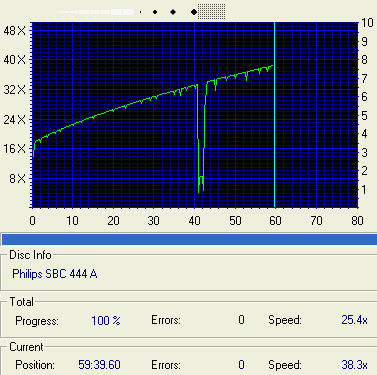
5. Philips SBC-444A
Test Media - Page 5
Philips SBC-444A
- Purpose
This disc has built-in defects that can be used for checking error rates. In
addition to providing known errors, it tests the player under maximum stress.
The purpose of this disc is adjustment / checking of the CD player. Note that
the disc is not within specification concerning local defects. The defects found
on the disc are interruptions of the information layer, black dots at out-read
area, and simulated fingerprint.
Disc SBC 444A provides two kinds of defects: Missing information, and black
spots. The tracks with missing information should provide fairly repeatable
results since these errors are encoded into the data. The sections with Black
Spots have the information in tact, but obscured by the black spots. In this
case, not only is there information lost, but the servomechanisms are stressed.
For example, when the readout beam encounters the black spot, focus, track following,
and clock recovery servo signals disappear. After the beam has passed the black
spot and the signal is restored, the pickup is out of focus, off track, and
the bit clock is at the wrong frequency. This causes many additional errors
to be generated in an unpredictable way.
6. CD-Check Test Disc
Test Media - Page 5
CD-Check
- Purpose
Digital Recordings
CD-CHECK is a compact disc which allows evaluation of the CD player's "error
correction headroom" (i.e. player's ability to correct data errors) and
"tracking" (i.e. player's ability to stay on track despite of disc
surface or other errors). CD-CHECK uses special digital signals in combination
with disc error patterns arranged over five tracks. The five tracks contain
a sequence of progressively difficult tests referred to as Check Level-1 to
Check Level-5. The higher the Check Level passed the more reliable the sound
reproduction of the CD player. A smooth, continuous tone of 20-seconds indicates
the player passes that Check Level. Any clicks, interruptions, skipping or looping
indicates failure of a Check Level.
|
CD-CHECK error sizes
|
|
Check Level-1
|
standard manufacturing errors
|
|
Check Level-2
|
0.375 mm
|
|
Check Level-3
|
0.750 mm
|
|
Check Level-4
|
1.125 mm
|
|
Check Level-5
|
1.500 mm
|
We test each the drive with the following procedure: We used WinXP Windows
Media Player to playback the disc, and using headphones we listened all tracks.
A continuous tone of 20 seconds plays in each track. If the drive playbacks
without an audible pop or click occurring during playback of the tone it passes
the check level. The tests are repeated five times. A result of 5/5 indicates
that no pops or clicks were heard in 5 out of 5 playbacks of a particular track.
A result of 0/5 means pops or clicks occurred during all 5 playbacks of a particular
track. Digital Recordings provides the following interpretation of results:
· Level-1 Pass: Player meets minimum requirements
· Level-2 Pass: Average error correction
· Level-3 Pass: Good error correction
· Level-4 Pass: Very good error correction
· Level-5 Pass: Excellent error correction