
4TB or Larger External HDDs Coming Next Year
By 2011 we may see 4 Tb or larger external HDDs and 4-disk 3 TB
drives from all the major 3.5-inch drive manufacturers, according to Thomas M. Coughlin, the founder of Coughlin Associates.
Seagate Technology and Western Digital introduced external HDDs
with 3 TB storage capacity earlier this year. These 3 TB external
HDDs had 5 disks and so were thicker than HDDs for desktop
computers. Both Seagate's and Western Digital's 3.5-inch 3 TB external HDDs
used had 5 rather than 4 disks and so were too thick for most
internal computer applications. By adding an extra disk a HDD
company can increase storage capacity without increasing the
areal density (areal density determines the amount of bits that
can be stored on a disk surface). There is an overall trend to
increasing the component count in HDDs as the areal density
growth has slowed over the last year or so.
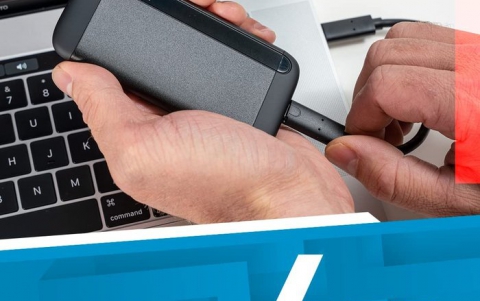
Small external HDD storage has become a significant driver of disk drive volume. In the third quarter of 2010 Mr. Coughlin estimates that close to 8% of all HDDs went into branded products (Digital Storage Technology Newsletter, Coughlin Associates, October 2010), mostly external storage devices. Because these devices sit on desks or in pockets they don't have the same tight constraints on dimensions that are necessary for HDDs that are incorporated into computer products. For computer products the hole or slot that they must fit into determines the product dimensions. Thus adding extra components to achieve higher capacities is easily done for external storage devices. At the same time external storage devices are used for backup and higher storage capacity are generally more attractive since they allow backing up more content or devices.
For a true desktop computer with 3 TB storage capacity only a maximum of 4 disks can be used. Thus higher storage capacity requires higher storage capacity areal density. WD's 3 TB 4-disk drive requires an areal density of about 530 Gbpsi (gigabits per square inch). This product raises the bar on storage capacity and we should see 3 TB desktop HDDs from all the major disk drive suppliers by the first par of 2011, Coughlin Associates estimates.
In 2011, besides widespread use of desktop storage technology enabling 3 TB storage capacity earlier in the year, we might see higher desktop capacities (depending upon the slowing rate of areal density increases).
"At the very least we will probably see 4 TB or higher external storage with small additional increase in areal density and using 5 disks," Mr. Coughlin said. "We expect that 2.5-inch external storage will move beyond the 2 TB available today to as high as 3 TB and laptop 2.5-inch drives with 1.5- 2.0 TB could happen in the second half of 2011 or early in 2012. Should Toshiba wish to push the storage capacities of 1.8-inch HDDs it would be possible to make one of these with 1 TB storage capacity," he added.
Beyond 2011 traditional perpendicular recording advances become more difficult and dual stage actuator HDDs or drives for some special applications using what is called shingle writing could provide even higher areal densities while the HDD industry sorts out whether HAMR or patterned media are the choice for more significant and multi-generational HDD areal density advances.
Small external HDD storage has become a significant driver of disk drive volume. In the third quarter of 2010 Mr. Coughlin estimates that close to 8% of all HDDs went into branded products (Digital Storage Technology Newsletter, Coughlin Associates, October 2010), mostly external storage devices. Because these devices sit on desks or in pockets they don't have the same tight constraints on dimensions that are necessary for HDDs that are incorporated into computer products. For computer products the hole or slot that they must fit into determines the product dimensions. Thus adding extra components to achieve higher capacities is easily done for external storage devices. At the same time external storage devices are used for backup and higher storage capacity are generally more attractive since they allow backing up more content or devices.
For a true desktop computer with 3 TB storage capacity only a maximum of 4 disks can be used. Thus higher storage capacity requires higher storage capacity areal density. WD's 3 TB 4-disk drive requires an areal density of about 530 Gbpsi (gigabits per square inch). This product raises the bar on storage capacity and we should see 3 TB desktop HDDs from all the major disk drive suppliers by the first par of 2011, Coughlin Associates estimates.
In 2011, besides widespread use of desktop storage technology enabling 3 TB storage capacity earlier in the year, we might see higher desktop capacities (depending upon the slowing rate of areal density increases).
"At the very least we will probably see 4 TB or higher external storage with small additional increase in areal density and using 5 disks," Mr. Coughlin said. "We expect that 2.5-inch external storage will move beyond the 2 TB available today to as high as 3 TB and laptop 2.5-inch drives with 1.5- 2.0 TB could happen in the second half of 2011 or early in 2012. Should Toshiba wish to push the storage capacities of 1.8-inch HDDs it would be possible to make one of these with 1 TB storage capacity," he added.
Beyond 2011 traditional perpendicular recording advances become more difficult and dual stage actuator HDDs or drives for some special applications using what is called shingle writing could provide even higher areal densities while the HDD industry sorts out whether HAMR or patterned media are the choice for more significant and multi-generational HDD areal density advances.